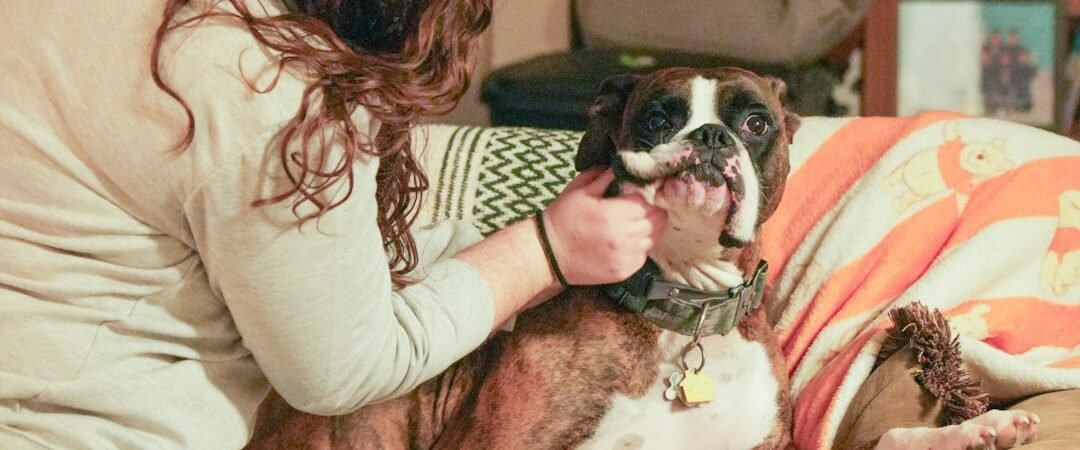
You sit down to work, pick up your phone or start cooking dinner, and your dog plants themselves in front of you and barks. And barks. If your dog barks at you, they are almost always trying to tell you something: they want attention, food, a game, to go out, or for you to stop doing whatever you are doing. This kind of barking is often called demand or attention barking, and it is one of the most fixable types, as long as you understand what keeps it going. This guide is part of our complete humane guide to stopping dog barking.
Quick answer: First rule out real needs: a toilet trip, water, hunger, pain or boredom. Then stop rewarding the barking. Wait for a moment of quiet before you give your dog what they want, and reward calm behaviour often, before they ask. Expect the barking to get louder for a few days before it fades. Give your dog enough exercise and brain work so they have less reason to nag.
Get the free 3-Day Quiet-Down Checklist — a simple plan to start this week.
Why does my dog bark at me?
- They want something. Food, a walk, a toy, to be let out, to get on the sofa. If barking has worked before, your dog will try it again.
- They want your attention. Even telling your dog off is attention. To a bored dog, being shouted at can be better than being ignored.
- They need something. A full bladder, an empty water bowl, or feeling unwell. Always check these first.
- They are bored. A dog without enough to do will often make their own entertainment, and that includes nagging you. See our guide to boredom barking.
- They are excited. Some dogs bark at you to start a game, especially during play or when you pick up their lead.
- They are worried. Less commonly, a dog may bark at you if something about you looks or sounds different (a hat, a mask, a strange object in your hand) or if they feel uneasy.
Most barking at owners is demand barking: a sharp, repeated bark, often with eye contact, while your dog stands or sits right in front of you. Not sure? Try the 1-minute bark quiz.
Step 1: check the basics
Before you treat barking as a habit, make sure your dog isn’t telling you something important. Do they need the toilet? Is their water bowl empty? Have they had a proper walk and some time to sniff? Is it their usual meal time? If the barking is new, or your dog seems uncomfortable, restless or unwell, talk to your vet. Our guide to sudden barking covers the warning signs.
Step 2: stop paying for the barking
Demand barking keeps going because it works. To change it:
- Don’t give in to the bark. If your dog barks for their dinner, the ball or the sofa, calmly wait. Look away, stay quiet and don’t move towards what they want.
- Wait for a pause. The moment there is a second or two of quiet, give your dog what they wanted (if it is reasonable), or a treat, or calm attention.
- Build up the quiet. Over days, wait for slightly longer pauses before you respond.
- Be consistent. Everyone in the house has to follow the same rule. If barking sometimes works, your dog will keep trying it, and harder.
Expect it to get louder first. When barking that used to work stops working, most dogs try harder for a while: louder, longer or more often. This is called an extinction burst. It is a sign the plan is working, so don’t give in now. Our guide to puppy barking explains why it gets louder before it gets quieter.
Step 3: reward calm before they ask
The other half of the fix is to give your dog attention, treats and games when they are calm and quiet, before they have to ask. If your dog is lying quietly while you work, drop a treat beside them or give them a calm stroke. You are teaching them that being calm is what gets good things.
Step 4: give them something better to do
- Teach an alternative. A ‘sit’ or ‘go to your mat’ is a polite way to ask for things. Reward it generously.
- Plan for your busy times. If your dog nags while you work or cook, give them a puzzle toy, a lick mat or a long-lasting chew just before you start.
- Meet their needs. A good walk with time to sniff, some training and a few short play sessions each day leave many dogs much less pushy.
- Teach a quiet cue. See how to teach the quiet command.
What not to do
- Don’t shout. To many dogs that is still attention, and it can make them more excited.
- Don’t give in ‘just this once’ after a long bout of barking. It teaches your dog that barking for longer works.
- Don’t use shock or spray collars. They don’t address why your dog is barking, and they can damage your dog’s trust in you. See is it cruel to stop a dog barking?
Frequently asked questions
Why does my dog bark at me when I sit down?
Usually because sitting down has become a signal that you are available for attention, food or play. Your dog may also be asking to join you on the sofa. Reward calm behaviour when you sit, and give your dog a chew or a mat to settle on.
Why does my dog bark at me when I’m on the phone?
When you are on the phone, you are talking but not to your dog, and you are often less likely to tell them off. Many dogs learn that this is a good time to nag. Give your dog a chew or a puzzle toy before a call, and reward them for staying quiet.
Should I ignore my dog when they bark at me?
Ignoring demand barking works well, but only once you have ruled out real needs, and only if you also reward quiet behaviour. Ignoring alone can leave a dog frustrated. Pair it with plenty of attention for calm behaviour and enough exercise and enrichment.
Why does my dog bark at me and not other people?
You are probably the person who usually responds, feeds or plays with your dog, so barking at you is most likely to work. It is a sign of a strong bond, not disrespect. Just make sure barking isn’t the thing that gets results.
Ready to start? Download the free 3-Day Quiet-Down Checklist.
For short daily practice sessions, the free Quiet Dog Toolkit has a training timer, and the printable Barking Log helps you track progress.