

Some dogs barely notice a storm. Others pant, tremble, pace, hide, bark or try to dig their way out of the house at the first rumble. Storms are hard for frightened dogs because they bring several things at once: loud, unpredictable bangs, flashes of light, wind and rain, and changes in air pressure your dog may sense before you do. The good news is that you can help a lot, both on the day and over the longer term. If your dog is also scared of fireworks, our fireworks guide uses the same approach.
Quick answer: On storm days, give your dog a safe den in a quiet inner room, close the curtains, add white noise or music to mask the thunder, and let them hide or stay close to you — comforting a scared dog is fine. Offer a long-lasting chew or lick mat. For the longer term, practise with storm sounds at a very low volume paired with treats, and talk to your vet if your dog panics, as there are medications that can help.
Get the free 3-Day Quiet-Down Checklist — a simple plan to start this week.
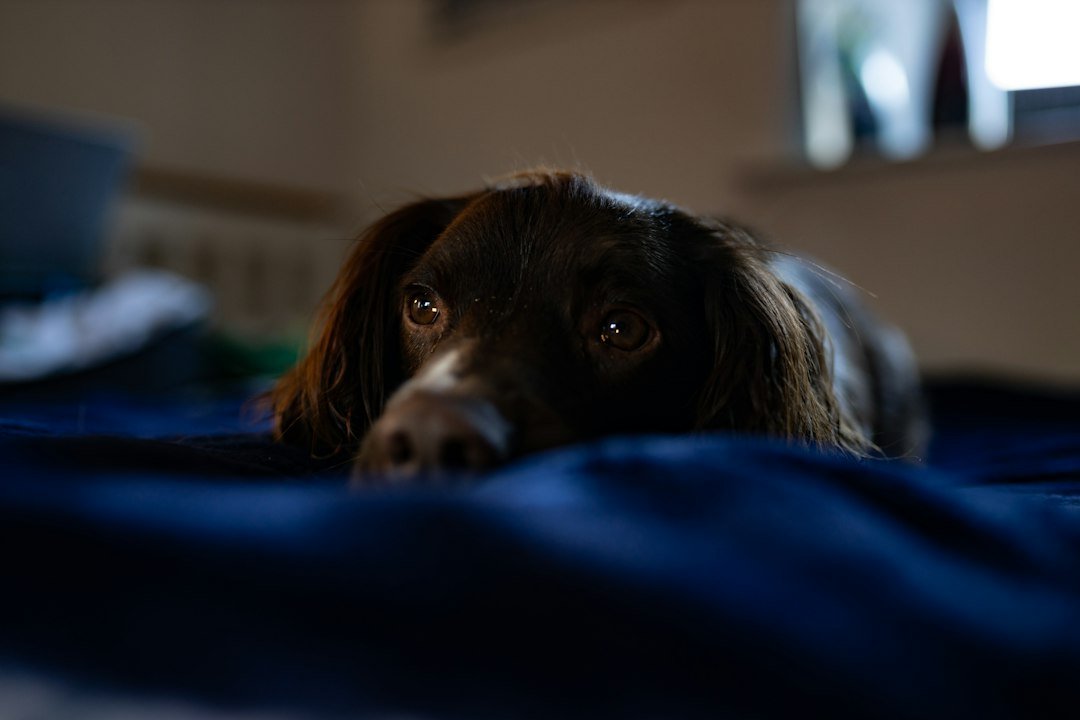
Signs your dog is scared of storms
- Panting, trembling or drooling when it isn’t hot.
- Pacing, whining, barking or howling.
- Hiding in a bathroom, under a bed or behind furniture.
- Clinging to you, or trying to escape.
- Refusing food, or accidents in the house.
Many dogs start to get uneasy before the storm arrives, as the wind picks up or the sky darkens.
On storm day: a calm plan
- Set up a safe den. Choose a quiet room away from windows, such as a bathroom or an inner hallway. A crate with a blanket over it, or a bed under a table, works well. Let your dog choose where to hide; don’t pull them out.
- Block the flashes and the noise. Close curtains and blinds, and play white noise, a fan or calming music to soften the thunder.
- Give them something to do. A stuffed frozen toy, a lick mat or a long-lasting chew helps many dogs settle.
- Stay with them if you can. Calm company helps. Comforting a frightened dog does not ‘reward the fear’.
- Go out before the storm. Take toilet trips early, and keep your dog on a lead outside, as scared dogs can bolt.
- Never punish fear. Shouting at a dog who barks or hides during a storm makes them more afraid.
Some dogs feel calmer in a snug wrap, such as an anxiety vest. Try it on calm days first so it doesn’t become a signal that a storm is coming.
Longer term: change how your dog feels about storms
Between storm seasons, you can gently teach your dog that storm sounds predict good things. This is called sound desensitization and counter-conditioning.
- Play a recording of thunder so quietly that your dog notices but stays relaxed.
- While it plays, give tasty treats or play a favourite game. Stop the sound, stop the treats.
- Keep sessions to a few minutes, and raise the volume only very slowly over days or weeks.
- If your dog stops eating or looks worried, turn it down and go back a step.
Recordings can’t copy the flashes, wind or pressure changes of a real storm, so this works best alongside a safe den and good management.
When to talk to your vet
If your dog panics, hurts themselves trying to escape, or the fear is getting worse each season, talk to your vet. Some dogs need medication to cope with storms, and your vet can advise on what is safe and suitable, as well as on calming aids. We’re not vets, and this guide is general information, not medical advice.
Frequently asked questions
Should I comfort my dog during a thunderstorm?
Yes. Calm comfort helps a frightened dog and doesn’t make the fear worse. Let them stay close or hide where they feel safe.
Why is my dog scared of thunder but not other noises?
Storms combine loud, sudden bangs with flashes, wind, rain and pressure changes, which can be much more frightening than a single noise.
Can my dog grow out of storm anxiety?
It often gets worse without help rather than better. Management on the day, gradual sound training and, if needed, help from your vet give the best chance of improvement.
Where should my dog stay during a storm?
In a quiet inner room away from windows, with a covered den or bed, background noise and something to chew.
Ready to start? Download the free 3-Day Quiet-Down Checklist.
For short daily practice sessions, the free Quiet Dog Toolkit has a training timer, and the printable Barking Log helps you track progress.