
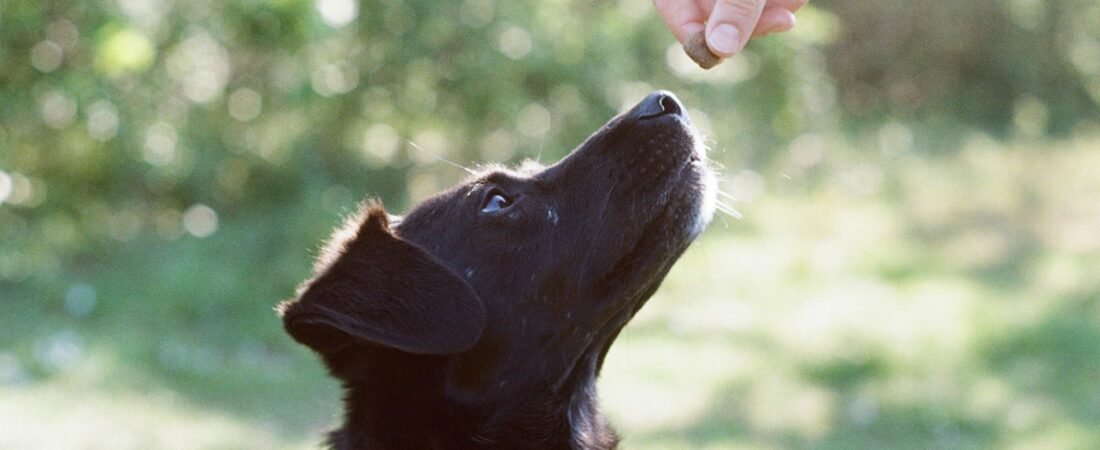
Most anti-bark devices sold online are designed to make barking unpleasant for the dog. A few are designed to make quiet easier to teach. That difference is the whole buying decision, and it rarely shows up on the box. This guide sorts the categories from kindest to ones we’d steer clear of, explains why a device you control by hand usually beats one that runs itself, and tells you plainly what we’d pick. For the bigger picture, our humane barking guide comes first — a device is a supporting tool, not the plan.

Quick answer: The kindest anti-bark tools interrupt barking without pain or fear — handheld ultrasonic trainers, bark-activated ultrasonic units, and enrichment or management tools. Citronella and shock collars sit at the harmful end. Our pick for your own dog is a handheld ultrasonic trainer used alongside rewards; for a neighbour’s dog, a weatherproof bark-activated unit on your side of the fence. No device fixes why a dog barks.
Before you buy: a device manages the noise, and training deals with the cause — see our positive reinforcement guide for barking. If you haven’t read it yet, do anti-bark collars actually work? is worth five minutes first.
The humane scale: device types from kindest to avoid
Removes the cause
Interrupts, no contact
Aversive — not recommended
Painful — avoid
- Enrichment and management tools. Puzzle feeders, lick mats, calming sound, window film. They aren’t sold as ‘anti-bark’, but they remove reasons to bark — which is why they come first.
- Ultrasonic devices. A high-pitched tone, inaudible to most people, that dogs find mildly unpleasant. No contact and no pain. Effectiveness varies a lot between dogs, and automatic units can be set off by other dogs barking.
- Citronella spray collars. A burst of scent on barking. Aversive and controversial; we don’t recommend them — more in our bark collar guide.
- Static or shock collars. Painful, a welfare risk, and restricted or banned in several countries. Avoid.
Tools to stop dog barking: what belongs in the toolkit
When people search for tools to stop dog barking, they usually picture a gadget. In practice, the tools that do the most work are often the least exciting, because they remove the reason to bark rather than punishing the bark itself:
- Window film or blinds for dogs who bark at passers-by — see window barking.
- A white noise machine or fan to mask outside sounds, especially at night — see our white noise comparison.
- A stuffable food toy or lick mat for boredom and home-alone barking — see puzzle toys.
- A baby gate or house line to stop door-rushing while you train — see barking at the door.
- A treat pouch and a ‘quiet’ cue — the cheapest tool of all; see teaching the quiet command.
- A handheld ultrasonic interrupter as a last layer, used to interrupt a bout so you can reward the pause (more below).
Automatic vs handheld: why control matters
Within the ultrasonic category, the biggest practical difference is who decides when the device fires.
Automatic (bark-activated) units respond to every bark in range. That’s convenient, but it means they also fire at barks you’d want — a single alert at a genuine knock — and sometimes at other dogs entirely. There’s also nobody there to reward the quiet that follows, so the dog only learns “barking is unpleasant here,” not what to do instead. Some dogs simply get used to the tone over time.
Handheld trainers only work when you press the button. That sounds like a downside, but it turns the device into a training tool: you interrupt a barking bout, your dog pauses, and you immediately reward that pause. Interrupt, then reward — that pairing is what actually teaches quiet, and it’s impossible with a device that runs on its own.
The rule of thumb: for your own dog, choose control. Automatic units make more sense where you can’t be present to train — most often, a neighbour’s dog.
Our picks (and why)
For your own dog: a handheld ultrasonic trainer, such as Good Life’s OnGuard. It only fires when you choose, which means you can follow every interruption with a treat for the quiet that follows — the combination that teaches rather than just suppresses. It also has a built-in torch, handy for evening walks. It’s at the pricier end for a handheld, but control is what you’re paying for.
For a neighbour’s dog: a weatherproof bark-activated unit, such as Good Life’s Bark Control Pro. It mounts on your property, detects barking automatically, and includes a remote for manual use. Like all ultrasonic devices it needs a clear line of sight — the sound won’t pass through solid walls or fences — and results vary between dogs. Use it after you’ve spoken to your neighbour, not instead.
How we choose: these picks are based on how each device works, its safety, and how well it fits reward-based training — not on long-term testing with our own dogs. We’ll update this page as we gather hands-on experience. See our affiliate disclosure.
What to look for in any humane device
- No pain or fear — it should interrupt, not punish.
- Adjustable sensitivity, so it isn’t triggered by every noise.
- A clear off switch and manual control, so you decide when it’s active.
- A fit for your dog’s temperament — a fearful dog needs management and confidence-building, not a deterrent.
- Never on a confined or home-alone anxious dog — see crate barking and barking when left alone.
Frequently asked questions
Are ultrasonic bark devices cruel?
They’re at the gentle end of the range — no contact and no pain — but they’re still designed to be mildly unpleasant. Used occasionally as an interrupter alongside rewards, they’re a reasonable tool. Avoid them for anxious or fearful dogs, and don’t leave an automatic unit running in a space your dog can’t leave.
Do ultrasonic bark devices actually work?
Results vary widely. Some dogs stop barking immediately; others ignore the tone or get used to it. They tend to work best as part of training — interrupt, then reward quiet — rather than as a stand-aloneseparation anxiety training fix.
What is the most humane way to stop a dog barking?
Dealing with the cause: meeting exercise and enrichment needs, reducing triggers, and rewarding quiet. Devices are, at most, a helper for that work. Our step-by-step guide covers the full approach.
Whatever you choose, pair it with training. The device buys you a pause; what you do in that pause is what changes the behaviour.