
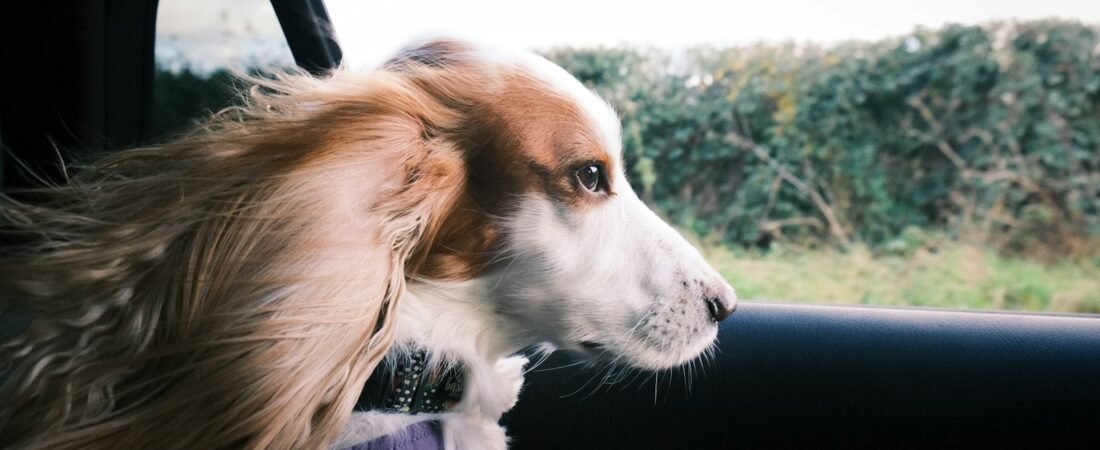
A dog that barks the whole car journey is stressful and genuinely unsafe — it’s distracting for the driver and usually means the dog isn’t coping. The good news is that car barking has clear causes and responds well to gradual, kind training. This guide is part of our complete humane guide to stopping dog barking.
Quick answer: Work out whether it’s excitement, anxiety, motion sickness, or barking at things passing the window — then rule out nausea with your vet, rebuild the car as a calm place in small steps, secure your dog and block the view, and reward calm. Never punish car barking, which usually adds stress.
Why dogs bark in the car
- Excitement. The car means a walk or an adventure, and the dog can’t contain itself.
- Anxiety or fear. The motion, noise, and confinement feel overwhelming.
- Motion sickness. Nausea makes dogs vocal and miserable — worth ruling out with your vet.
- Barking at passing things. Cars, people, and dogs flashing past the window trigger the same reactivity you see on walks.
- Frustration or guarding. Some dogs bark to guard the vehicle or out of frustration at being contained.
Step-by-step: a calmer car ride
- Rule out motion sickness. If your dog drools, licks its lips, or seems unwell, talk to your vet — treating nausea can transform car behaviour.
- Rebuild the car as a good place. Feed treats or meals in the stationary car with the doors open, then with the engine on, before you drive anywhere. Go at your dog’s pace.
- Secure your dog. A crash-tested crate or harness is safer and often calmer — many dogs settle better when they can’t roam.
- Block the view. A crate cover or window shade stops passing traffic from setting off reactive barking.
- Start with tiny trips. A one-minute drive that ends somewhere good, then build up — and reward calm throughout. A solid ‘quiet’ cue helps here too.
Frequently asked questions
Why does my dog bark in the car but nowhere else?
The car combines several triggers at once — motion, confinement, noise, and a stream of things flashing past the window — so a dog that’s calm at home can still find the car overwhelming or over-exciting.
How do I stop my dog barking at other cars and people from the car?
Block the view with a crate cover or window shade, and use the same distance-and-reward approach as leash reactivity: reward calm, feed treats when a trigger appears, and keep early sessions short.
Should I ignore my dog barking in the car?
Not if it’s driven by fear or nausea — that’s distress, not a demand, and ignoring it won’t help. Address the underlying cause and reward calm instead. Never punish it, which adds stress to an already stressed dog.
For safety, sort car barking with the vehicle stationary and in short training sessions — not by trying to correct it while you’re driving.