
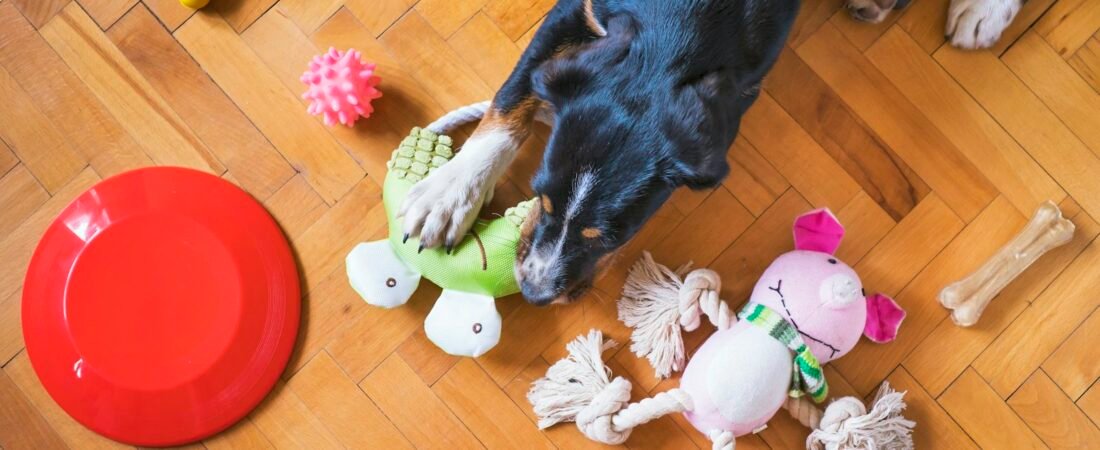
Somewhere around four months old, your puppy’s gums start to ache as adult teeth shove through — and a teething puppy with nothing good to gnaw on will find your table legs, your trainers, and your fingers instead. At that stage a chew toy isn’t a nice-to-have; it’s the thing standing between sore gums and a chewed-up house. This guide covers how to pick one that genuinely soothes teething and survives needle-sharp puppy teeth, and it’s part of our calming dog toys series and complete guide to stopping dog barking.
Quick answer: The best puppy chew toys are soft enough for sore teething gums but tough enough to survive sharp puppy teeth — pliable rubber and freezable textured toys, sized so nothing can be swallowed. Keep a chilled one ready for the evening ‘witching hour’ when teething fussing tends to peak.
Why teething puppies chew everything
Puppies explore the world with their mouths from day one, but chewing ramps up sharply during teething — roughly three to six months — because gnawing relieves the ache of erupting teeth. A pup with no appropriate outlet doesn’t stop chewing; it just redirects onto whatever’s nearest, and often fusses, whines, and barks from the discomfort on top. Give the right chew toy and all of that energy lands somewhere safe.
A chew toy for each stage of teething
Matching the toy to where your puppy is in the teething process makes a real difference:
- 8–12 weeks (baby teeth, ‘needle’ teeth): very soft rubber and soft fabric toys — tiny jaws, sharp little teeth, gentle chewers.
- 3–4 months (adult teeth starting): soft-but-textured rubber and freezable teething toys; the cold is the key soother now.
- 4–6 months (peak soreness): this is the destructive window — offer the most absorbing options: stuffable rubber toys you can fill and freeze, plus a couple of chilled textured chews in rotation.
- 6 months+ (adult teeth settling in): you can move up to sturdier chews as the chewing drive matures — see our long-lasting chew toys guide.
The best types of puppy chew toy
- Soft, pliable rubber chews. The teething all-rounder — gentle on gums, and the stuffable kind can be packed with food and frozen to last far longer.
- Freezable teething toys and rings. Ridges and nubs massage sore gums while the cold numbs them.
- Damp, frozen rope or fabric toys. A cheap, effective soother — freeze a wetted rope toy; just supervise and bin it the moment it starts to fray.
The 10-second safety check
Before handing over any chew toy, run it past three quick tests — it genuinely takes seconds and prevents almost every chew-toy accident:
- The thumbnail test: press your nail in. If it doesn’t give at all, it’s too hard for puppy teeth and could crack a baby tooth.
- The size test: it should be too big to fit entirely in your puppy’s mouth — no risk of swallowing or lodging at the back.
- The piece test: no small parts, squeakers, or bits that can be torn off. Check it again each time, and retire it once it’s worn.
And always supervise a new toy until you know how your pup handles it.
Turning the toy into calmer behaviour
Keep a few chew toys within easy reach, and the instant your puppy grabs something off-limits, calmly trade it for a chew toy and praise them for taking it — you’re teaching ‘chew this, not that’ one swap at a time. Rotate two or three so they stay novel, and save a stuffed-and-frozen one for the evening fuss. Pair this with the routine in our puppy barking guide for a calmer pup around the clock.
Frequently asked questions
What are the best chew toys for a teething puppy?
Soft-but-durable, freezable toys sized correctly for your pup — pliable rubber chews and textured teething toys lead the pack. The cold is what soothes sore gums, so anything you can chill or freeze has an edge.
How do I soothe my puppy’s teething pain?
A frozen or chilled chew toy, teething ring, or damp frozen rope toy numbs the ache while giving a safe outlet. Offer them especially in the evening, when teething discomfort and fussing tend to be worst.
Why won’t my puppy stop chewing everything?
Because teething hurts and puppies explore by mouth — it’s normal, not naughtiness. Keep tempting items out of reach, always have a chew toy ready to swap in, and make sure your pup has enough exercise and company; the phase passes.
Can I leave a chew toy with my puppy when I’m out?
Only a chew-proof, correctly sized toy with no parts that can break off — and ideally one you’ve already watched them use safely. Keep frozen food toys for times you’re home to supervise.
If there’s one habit worth building, it’s keeping a frozen chew toy ready for the witching hour — it’s the simplest way to turn a chewing, whining puppy into a settled one.