
If your dog barks, howls, or chews itself into a state the moment you leave, the right toy can genuinely take the edge off — with one important caveat we’ll be honest about below. This guide is part of our calming dog toys series and our complete humane guide to stopping dog barking.
Quick answer: The best toys for separation anxiety keep a home-alone dog occupied and comforted — stuffed, frozen food toys, puzzle feeders, lick mats, and heartbeat comfort toys. They help mild, boredom-driven cases the most; genuine separation anxiety also needs gradual training and often professional support.
Can toys actually fix separation anxiety?
It depends which problem you have. A bored dog that gets restless when alone is helped enormously by a good toy — something absorbing to do turns your departure into a non-event. But a dog with genuine separation anxiety is panicking, not bored, and a toy alone won’t resolve that. For those dogs a toy is a helpful part of the plan, not the whole plan. Telling the two apart is the first step.
The best types of toy for a home-alone dog
- Stuffed, frozen food toys. The classic for good reason — a rubber toy packed with food and frozen keeps a dog working and licking for a long time, turning your exit into something good.
- Puzzle and treat-dispensing toys. Make your dog think and forage for its food, which is calming and time-consuming.
- Lick mats. Licking is naturally self-soothing; a lick mat smeared with something tasty settles many dogs as you head out.
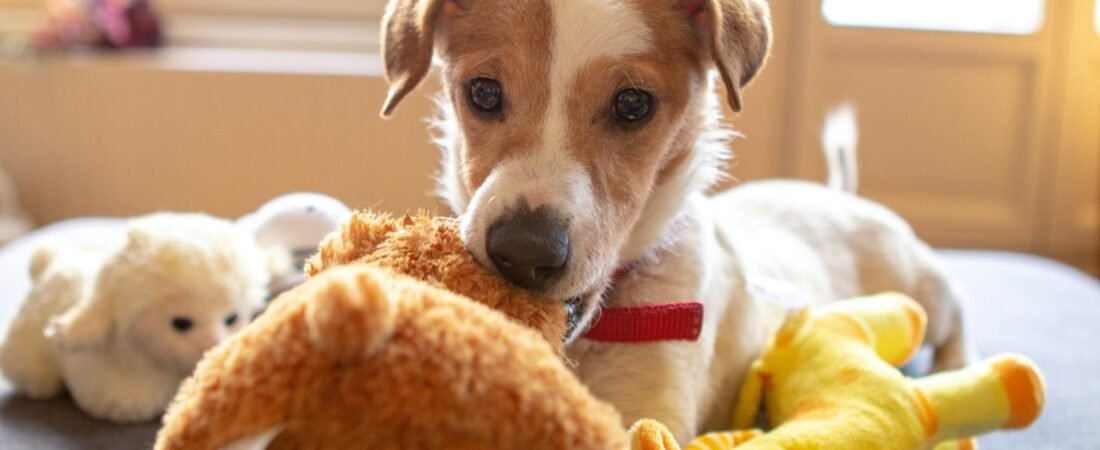
- Heartbeat and comfort toys. A soft plush with a simulated heartbeat can reassure a dog (and especially a puppy) that’s uneasy about being alone.
How to use them well
- Give the toy as you leave — so the good thing is tied to your departure, not your return.
- Keep departures calm and low-key; big emotional goodbyes raise the tension.
- Make it safe for solo use — only chew-proof, correctly sized toys with no parts a dog can tear off and swallow.
- Don’t rely on the toy alone — pair it with gradually building up alone-time, as in our home-alone guide.
When toys aren’t enough
If your dog panics within minutes, drools, paces, or is destructive near doors, that’s true separation anxiety — a welfare issue that needs a structured desensitisation plan and, in many cases, a force-free trainer or veterinary behaviourist alongside the toys. Work through stopping barking when left alone for the full approach, and please don’t use a bark collar on a home-alone dog.
Frequently asked questions
Do toys help with separation anxiety?
They help a lot with mild, boredom-related cases and are a useful part of the plan for more serious ones — but a toy on its own won’t cure genuine separation anxietyseparation anxiety training guide, which needs training to change how your dog feels about being alone.
What is the best toy to leave a dog home alone?
A stuffed, frozen food toy is the go-to: safe to leave, long-lasting, and absorbing. A lick mat or a tough puzzle feeder are strong alternatives, chosen to match your dog’s size and chewing strength.
Will a toy stop my dog barking when I leave?
For a bored dog, often yes — it gives them something better to do. For a truly anxious dog it will help but won’t be enough by itself; combine it with gradual alone-time training.
Introduce the toy while you’re home first, so your dog already loves it before it becomes a leaving-time ritual.